
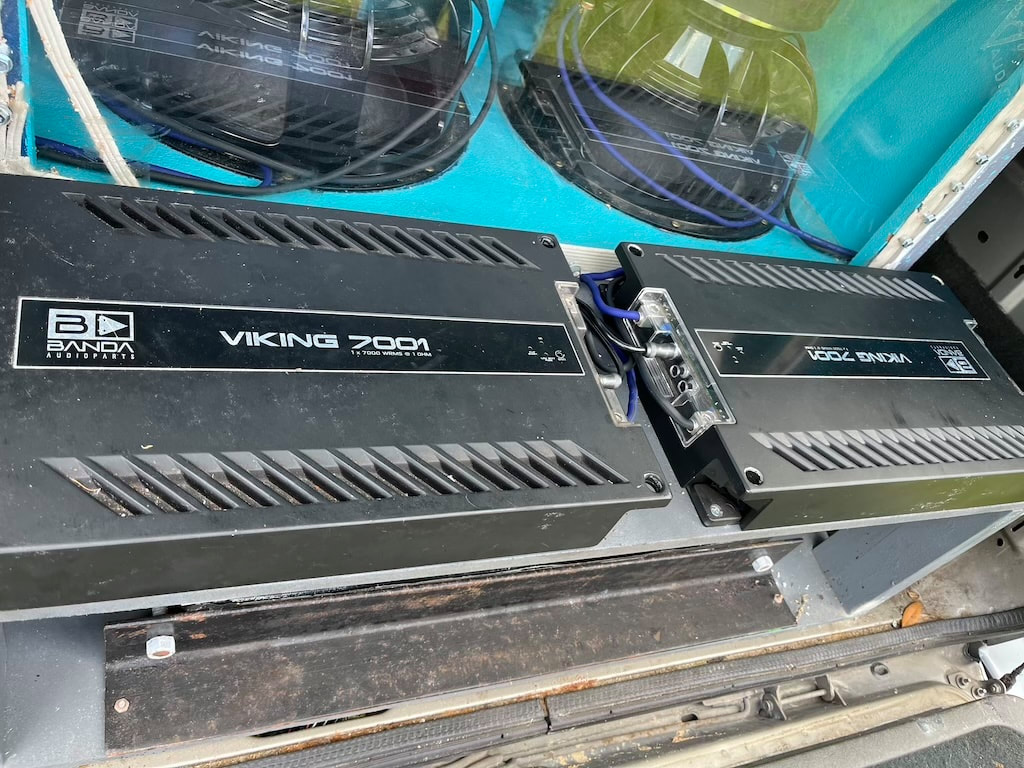
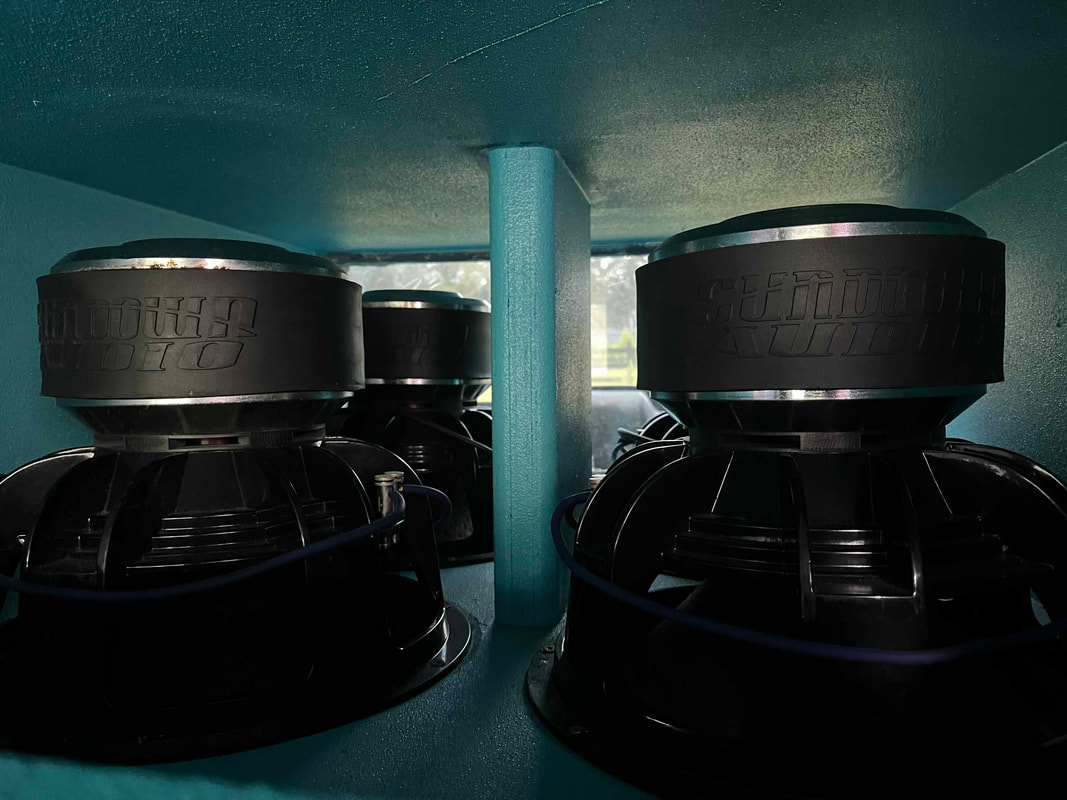
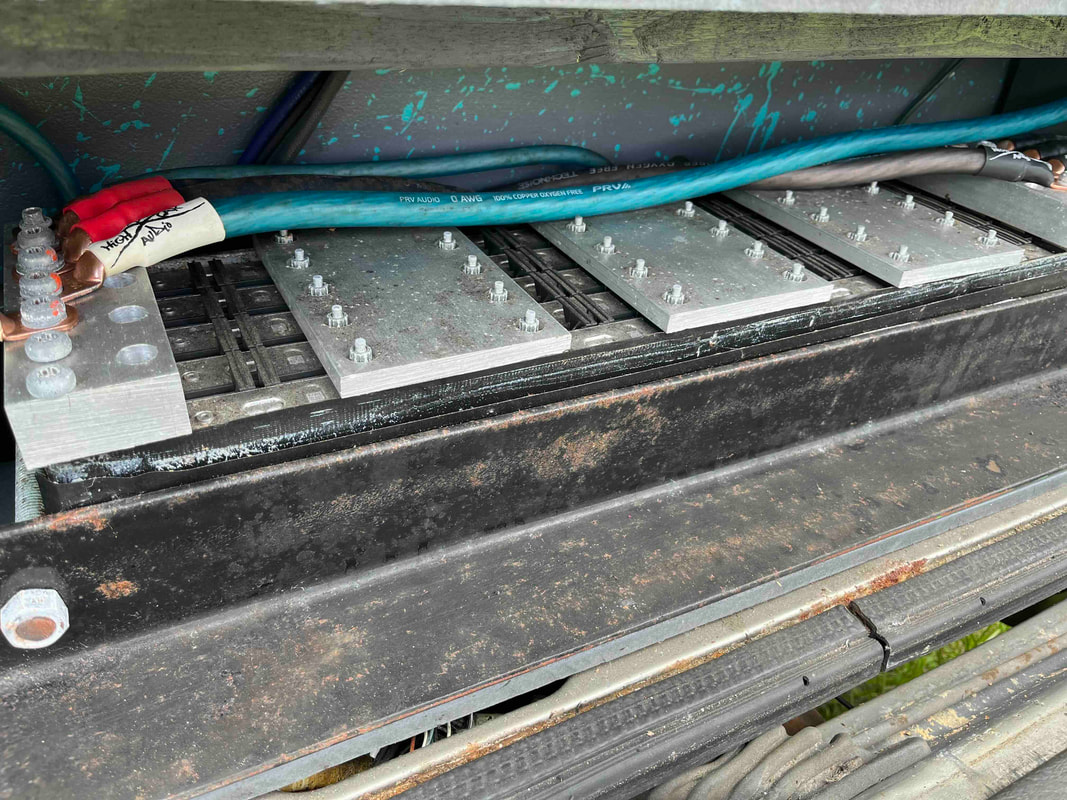
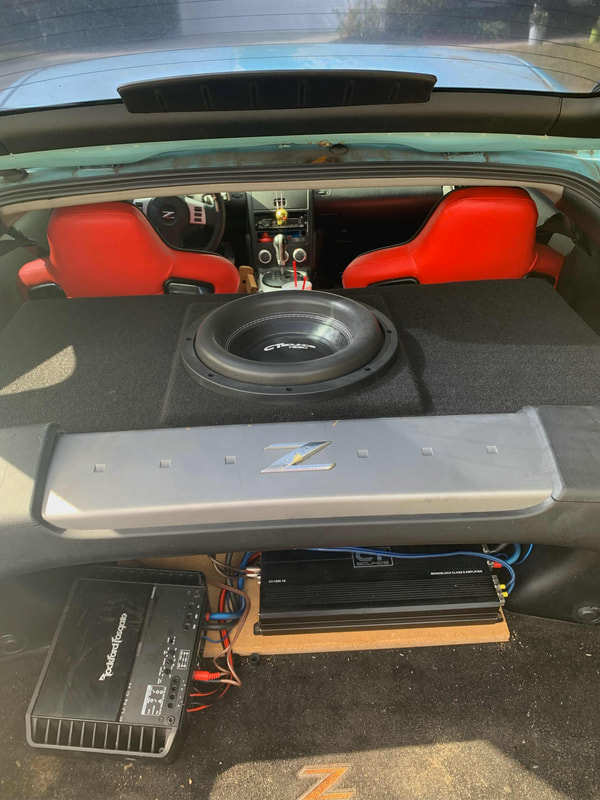
I design and model custom subwoofer enclosures for vehicles, applying mathematical modeling and simulation techniques to optimize sound quality. Each build bridges acoustic theory with practical design for accurate, high-efficiency performance tailored to its environment.
|
|
|
The foundation of my enclosure design work comes from applying acoustic and mathematical principles to predict how sound behaves inside a speaker box. Central to this is Helmholtz resonance, which models the box as a resonant system where air inside the enclosure and in the port act like a spring–mass system. By carefully selecting the internal volume and port dimensions, I could calculate the tuning frequency of the enclosure and align it with the driver’s intended performance range.
To refine the design, I incorporated Thiele/Small parameters, which are a set of electro-mechanical values that describe a loudspeaker driver’s behavior. Using these parameters, I modeled frequency response curves, simulated box alignment types (sealed, ported, bandpass), and compared performance trade-offs between low-end extension, efficiency, and box size. These simulations allowed me to optimize for smoother bass response and reduced distortion, ensuring that each design was mathematically tuned before a single piece of wood was cut.
To refine the design, I incorporated Thiele/Small parameters, which are a set of electro-mechanical values that describe a loudspeaker driver’s behavior. Using these parameters, I modeled frequency response curves, simulated box alignment types (sealed, ported, bandpass), and compared performance trade-offs between low-end extension, efficiency, and box size. These simulations allowed me to optimize for smoother bass response and reduced distortion, ensuring that each design was mathematically tuned before a single piece of wood was cut.
|
|
|